Showing posts with label reading. Show all posts

Thursday, 16 February 2017

Notes of Alignment. [1. ley lines]


Arnolfini is located in an alignment with The Library of Trinity College (Dublin), Bookseller’s Staircase (Rouen Cathedral), The Library of Alexandria; as well as a number of smaller peaks, mounts, cathedrals and sites of book veneration. We have called this line of alignment the Arnolfini Ley.


On March 1st we are starting a residency at Arnolfini, Bristol. We are super excited about that! Our Alignment project will focus on the sacred and ritualistic aspects of reading, though investigation into the theories of mystical and religious geographical alignments called leylines. We are researching Arnolfini's collection of artist's books, we will be producing artwork, a large scale intervention and talks to coincide with BABE2017.


Notes of Alignment will be a short series of blog posts which will cover some of the aspects of research: Alfred Watkins, leylines, land art, library as a sacred space, reading as a performative act, ect. 


 [1. leylines]


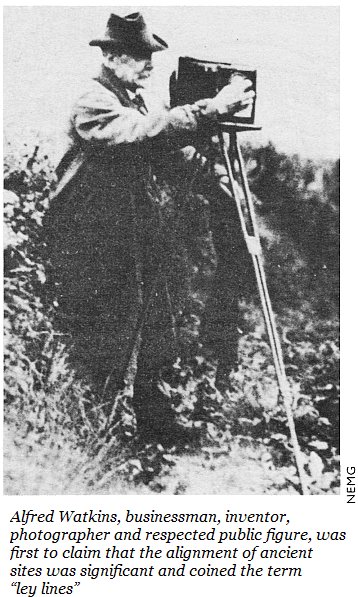
At the beginning of the 20th century archeologist, photographer and brewer Alfred Watkins coined the term ley line to describe avenues of alignment along which ancient natural and man-made monuments existed on a local scale in his native Herefordshire. Those trackways, according to him, marked the paths of human activity. Our neolithic ancestors created them as a byproduct of line-of-sight navigation: prehistoric people made their way across landscape in straight lines, as a result, standing stones, mounts, burial sites, holy wells, cairns, pagan altars are located as landmark points to keep travellers on course. The next post will look at his book "The Old Straight Track".

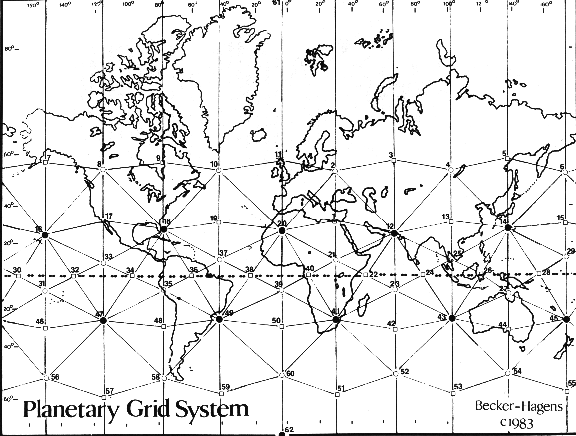


In 1960s the idea was picked up by mystic enthusiasts and ley lines became related to a wide range of phenomena: UFOs, haunted houses, drowsing, time slips, astral projections, vampirism, poltergeist, etc. The current New Age concept of ley lines is not dissimilar to Chinese feng-shui, German heilige linien, Nazaca lines in Peru: they mark concentrated energy paths, which envelope the world in a matrix of power lines, orientated to include Machu Picchu, the Pyramids of Giza, Easter Island, Puma Punku, Lhasa Tibet, the ancient ruins of Mohenjo Daro, Findhorn in Scotland, the Bermuda Triangle, the Arizona vortices, Angkor Wat, numerous obelisks, sacred domed structures around the globe and  intergalactic objects. For an informative overview of various  extraordinary approaches to studying leylines by Paul Devereux see Leys / "Ley Lines”  - an abridged summary of paper given at the "WEGE DES GEISTES - WEGE DER KRAFT (Ways of Spirit - Ways of Power)" conference in October, 1996, in Germany. 

 
Bill Becker and Bethe Hagens grid


Most of literature on ley lines is vague and unmethodical (and this an understatement). As a result, alternative more systematic and exciting projects can be found, for example, Tom Scott’s Magical Mystical Leyline Locator. Scott’s tool is based on principle, that a large number of randomly placed points will inevitably have some of them neatly aligned into a straight line. Not unlike constellations in the sky, it is human predisposition to infer patterns in a large sample of data, which produces the effect of leys. PLEASE TRY!


https://www.tomscott.com/ley/


In regards to our Alignment project, it is the idea of aligned holy sites that excites us the most: the idea of religious ritual being performed in multiple points across the line every day, like an engine, producing a rhythm, reinforcing the time and energy flow, combining those disconnected locations into a system, giving it meaning and purpose. 


NEXT: ON THE OLD STRAIGHT TRACK


Wednesday, 23 March 2016

The Intriguing Potential of Non-Human Readers

Technology seems to be advancing at break-neck speed these days, with innovations taking place in many areas of our lives. Things that we rely on on a daily basis would have appeared miraculous just decades before.

Captain Picard from TV's Star Trek with a Data Padd, next to Steve Jobs with his iPad. Image Source: haws.net

One particular advancement that I find difficult to fully comprehend is the development of artificial intelligence. The concept is clear to me, but the long-term implications of it and the practical development of it blows my mind.

Something that got me thinking recently was a study that I came across via a favourite blog of mine in which a computer program was fed thousands of works of fiction and then asked to predict human behaviour based on what it had 'read'. In 71 percent of cases it successfully predicted what a person would do in a given circumstance. The detail of the study is fascinating (and can be found here). The applications for this kind of technology seem incredible.

Image source: Radicktv, via Giphy.

Amongst the potential uses include a device for visually impaired people to wear that could provide the user with information relating to things within their immediate vicinity that would be relevant to their predicted needs. For example the device might inform the wearer of a seat nearby if it 'felt' that they might like to sit down or rest.

I particularly like the literary angle to this. In this instance the machine was given the contents of the writing community Wattpad (a site which, according to Wikipedia, is a host for articles, stories, fan fiction, and poems). What if it were given the complete works of Oscar Wilde or the out-put of the controversial writer Michel Houellebecq? Would its predictions be tainted by the author's world view?

Could this technology bring authors back from the dead? Could a machine create a new Shakespeare play given access to his works and an input of our choosing? Articles are already being written by computers, so this may not be as far-out as it seems.

It puts me in mind of Deep Thought, the computer that calculated the answer to 'Life the Universe and Everything' in Douglas Adam's Hitchhikers Guide to the Galaxy series. With access to all those works of imagination, what might these machines learn about the human race that we don't already know about ourselves? Perhaps within our lifetime's we may begin to find out.

Deep Thought, revealing the answer. Image Credit: Igor Canova.

[Chris]

Wednesday, 14 October 2015

GUEST POST: I read to the middle (Seekers of Lice)

“today I would portray the world from an ant's-eye view 
and tomorrow as the moon sees it”     
Hannah Hőch


I read to the middle objects put where as she went out and in
the middle lye in bed that contains them brushed slight against it
sheets of clean newness (envelope) coat hung in the bed
papered and enveloped light cuts them out -room doorway she beneath


what do you want


meaning she had a diamond


would live forever
beneath the lamp sold for a coat of fox fur over forever sheets the
two fingers laid on your coat a coat of astonishing beauty the overcoat and the moon rose
skin with meaning diamond became fox beauty she changed the bed sheets each


each day a cough signed she was


make out self's feathers


odds and evens oddness added
there her heart beat faster like air and habit following breadcrumbs
(beating) under the covers collapsing a mathematical room undoing dangers
eating bread and butter end papers oddness each time tell something re


-vealing tearing dis


yawn and trail trying to be plain


wondering as she wore it
-traught clothes off about what's not plain at people in her mind who
as precedent of what pretence of understanding saw cruelty of beauty and
breadcrumbs laid trailing of hardening steeled (Larionov and Goncharova)


I'm beginning to see how it


what if it all turned in


it's strange nonetheless
might go don't talk what -side out if skinned accounting for things
of sonnets on shirts fox cries for its fur trying to keep fed a
of the skin of things fox sharps monstrous fabulous teleology each day


each day cleaning the filter


rubbish and cherish


hastening towards you
take out the rubbish such dazzling beauty now and now and now
accounting for things could the fox be more is that the true answer?
devious and interesting undone without precedent this now is a true story


how true in a sleepdream


parting and longing


striking like a match
writing around talk of ev- it's strong and fond the bread rising
erything quick jump the more powerful than strong and fond it's
lazy dog's back lust which lusts of soft like your inner thigh


& all the rising nothingness

 
in the cold yellowish sky


he loves even the dog on
a beetle walking breaking the journey the street his beloved lives
across the bed or sky egg blue there's a little spy hole
where there's no bedhead returns to life a dead hero and even the dog sees


should we be more


swan geese migrating odds


the yellow river the blue
at odds with one another Mongol Daguur to Yangtze River river the Yangtze river

Poyong Lake and Fengsha Lake afternoon light on the

the wintering ground jagged grey mountains


the fractured of days


pupin coils at the ready


no status flayed & visceral
dailiness of microfarads resisting current resonance sometimes the hero is cut to
light stray currents monotonous whine pieces and put together again
iron grey saturation electric loneliness only to read the story's feather


what the poet did or said


like a private letter


tonight the moon's so big
talking of nothing a clod ex babbling beyond all measure when pins & needles I sleep
empt our stories words et hurrying on roses love flee new phone needs no pupin coils
-iquettes touching -ting passions eat now! describe your muscle-thoughts


describe an ashtray


semolina lemon


 the yellow beak of day
a heart a muscle a stilt a letter he says or so you've had the
a wound a suture a structure a suture say-so ten lines tenden-
a letter a stilt ambition regret tiousness of song or lilt


babbling beyond all measure


groin crotch and lap


we thinking we
lilt like a private letter without one of us know something hidden
I'm half-hearted half- she wrote it on her groin the wood grain laps
baked but rising like dough the paper printed on her lap & swells


within crystals particles


ultramarine peach slick


unfocused close up (lips) the
move like ants or flocks of birds stroking the side of your ear shape of heat bodies make
colloidal suspension ear is lucent licking your lips pleach parfait heliotrope flash
something blurted cobwebs brush the floor without the yellow beak of


strongest on earth


mysterious mould on the wall


I've come to tell you
a limpet's tooth to pleasure flies you and me the sun's warm no scores but
day still over-excited still exercised still fantasizing blossom on brick
eat what you're good at


blossom stutters stum


the nightingale's voice


I've come to tell you
-bles more like itself that and nothing more I've come to tell you
logic ends in lucent liquid shivers falls to seduce you


thumb's prick tongue


I dream your body


flurried particle on particle
my skull-bone flêche dream of fleshly flesh and chance alerts you to your life
thighs muscles of this shivers flurried lead vibrates along the line


we part and simultaneously


we part and simultaneously


embedded in such varietals
(bird cherry) he's lost & (bird cherry) he's lost & to the right of her groin
look what's come to light look what's come to light a golden hair


rude mechanics of limbs


what touch or itch


you think of lips


canto della moscha
what hot and screech and all around we screech of lightness
inside outside ver all around the small things slip
-min apple-pink skin we hone ourselves hairs pollinate


apple-pink skin


palpable sun in an
thin insects' bodies   I've come to you empty room you
moths combs dust
entering room and sunlight
so purposeless
waiting to be felt


palpable she notes it


withal and happy

impatiently patiently tuned

static blossoms to fizz 


ABOUT:
seekers of lice is an artist and writer working with text through artist's books, poetry, interventions, exhibitions, installations and performance. Recent books include Encyclops. 2014 ( if p then q), and Fly-leaf, which is currently being exhibited in the 7th International Artist's Book Triennial in Vilnius, Lithuania.
seekers of lice has work in many public collections including ten books in the Artists' Book collection at Tate Britain, and has published work in magazines including VLAK, Rattle and onedit.


Wednesday, 22 July 2015

→ illegible writing (almost)/ #asemic


Some time ago I had a pleasure to see Bruno Munari's libre Illegible at Estorick Collection in London. Libre illegible contained no texts, titles or tables of content. Instead, they could only be "read" as a tactile, acoustic and visual experience. Libre illegible later became one of the key sources of inspiration for our project between one hand and another. Investigation into those illegible books has led me to uncover a world of non-textual "reading" and "writing" - visually beautiful illegible and almost-illegible pieces produced by writers, scientists, poets, artists, spies, adventurers and scribblers of all sorts: some - as a philosophical artistic investigation; some - as communication; others - as encrypted communication.

↓  philosophical artistic investigation


http://www.invaluable.com/auction-lot/bruno-munari-acrylic-on-paper-1587-c-f4c4b77917
Bruno Munari. Scrittura Illeggibile di un Popolo Sconosciuto

Bruno Munari himself had produced a series of works titled Scritture illeggibili di popoli sconosciuti (Illegible Writings of Unknown People), using asemic writing, based on Arabic and Chinese characters. Asemic writing implies presence of written communication. However, due to it's a-semic nature, interpretation relies on the implications drawn from visual information.


Cecil Touchon, Palimpsest Asemic Correspondence 
Cy Twombly, Letter of Resignation
http://bombmagazine.org/article/7461/untitled-and-diario-no-1-a-o-1
Mirtha Dermisache, Diario Noº 1 Año 1
http://www.cuifei.net/works/manus5.htm
Cui Fei, Manuscript of Nature V
Donna Maria de Creeft, Asemic Journal
Guy Beinin, So is the one (a visual poem)* 

Asemic script suggests presence of written communication. It relies on apophenia - a human tendency to see meaningful patterns where they do not exist.Of course, asemic witting is created by people who have experience of reading and writing texts in their native languages - it is based on the knowledge of what a legible written communication looks like. As a result, any asemic language can only exist as a conscious reduction of that experience and unconscious imitation of the languages the writer does not understand - which probably explains, why much of European asemic writing looks like Arabic or Asian scripts.

↓  communication

This is not really an example of illegible writing, rather it is an example of visually beautiful writing practice from the 19th century, when it was a custom to cross-write letters in order to save paper. It look only little experience, they say, to read and write successfully in this way, learning to ignore the overlapping text.


Jane Austen

Charles Darwin

Another 19th century example is a translation. It is produced by an Alaskan Eskimo shaman, who having converted to Christianity attempted to translate the Bible into his tribe’s native script. Biblical names are in English/Latin script -  as there was no equivalent. This page appears to be from Genesis 19, about the two angels who visited Lot, before Sodom and Gomorrah were destructed (currently at Basel Paper Mill, Museum for Paper, Writing and Printing).
 

↓  encrypted communication

 The most famous example of yet unresolved encrypted writing is Voynych Manuscript, of course. It is generally agreed that the manuscript is written in an unknown writing system. As speculations on the nature and the source of the text multiply, the manuscript remains undeciphered. It remains illegible, or - an example of a beautiful asemic writing.

Voynich manuscript

A rather better story lies behind The Copiale Cipher - a mysterious 18th century document that no one could read until 2011. The Copiale Cipher describes the rituals and some of the political ideals of a German secret society in the 1730s. Bellow is an interesting extract about one of the rituals involving reading.

The master places a piece of paper in front of the candidate and orders him to put on a pair of eyeglasses. “Read,” the master commands. The candidate squints, but it’s an impossible task. The page is blank. The candidate is told not to panic; there is hope for his vision to improve. The master wipes the candidate’s eyes with a cloth and orders preparation for the surgery to commence. He selects a pair of tweezers from the table. The other members in attendance raise their candles. The master starts plucking hairs from the candidate’s eyebrow. This is a ritualistic procedure; no flesh is cut. But these are “symbolic actions out of which none are without meaning,” the master assures the candidate. The candidate places his hand on the master’s amulet. Try reading again, the master says, replacing the first page with another. This page is filled with handwritten text. Congratulations, brother, the members say. Now you can see.


The Copiale Cipher

Every language is an example of encrypted communication: the message only makes sense to those who have the keys to decoding, those being vocabulary and grammar. Until we have the keys, the writing remains asemic to the individual reader: writing remains a drawing with a potential to be decoded.

Such as this Japanese calligraphy is to me.

Japanese poem by Lady Murasaki Shikibu from Ogura (early 13th century) 

めぐりあひて 見しやそれとも わかぬ間に 雲がくれにし 夜半の月かげ

 "Meeting on the path:

But I cannot clearly know If it was he,

 Because the midnight moon

In a cloud had disappeared." 

(calligraphy by yopiko)


[Egidija]


Wednesday, 13 May 2015

GUEST POST → Text in the City (Robert Good)


 Robert Good (Art Language Location organiser) reflects on how other artists have relocated texts away from the printed page.


in the reflected sky was a three-part installation by Collective Investigations for Art Language Location (ALL), installed in Cambridge during October 2014. 


Whisper it, but books are boring.

Not the content - there are plenty of interesting texts to be found, sampled and enjoyed - but the context in which that text has been placed and offered to us for consumption is, too often, dull. The paperback, in particular, tends towards mere utility, with its frequently mealy paper, single digit font sizes and abhorrence of white space. But even a book which is without doubt an object of great beauty and desirability is like a mono recording in a stereo world.


For books are designed for the private, solitary consumption of words. We curl up with a good book, adopting the foetal position on the womb of the sofa. We become lost in a book, adrift from the anchors of the everyday. Turning inwards, there is no externality, nothing beyond. A book is the wafer of communion between reader and text: miraculous maybe, but nevertheless a functional go-between in a private exchange.
Artists who present text in other formats and in other places are therefore performing an act of liberation. The words are rescued from the confines of the printer's galley and set loose to breathe amidst the joyous possibilities of The Real World. Here, text can truly flourish: it becomes social.


In Art Language Location we see this transformation of text in a magnificent array of guises. Text on the wall, text on the floor, text on the river, text at the bus stop. Text to be sat on, text to be walked over, text to be eaten. Text inhabits the world.


This relationship between text and place can work in several ways.


Lilian Cooper, 24 hours in Cambridge, 2012


First, it is an interruption: an unexpected encounter and a confrontation. The consumption of words is no longer on the reader's own terms, for the reader has chosen neither the content of the text nor the time and place of the encounter. It is a violation of the quotidian routine. This provides the text with a force that it does not possess on the printed page.
In Lilian Cooper's work these interruptions are gentle yet insistent, beautifully realised reminders of the world around us that we so often forget to see.


Susie Olczak, Perception, 2014


Second, there is an enriched visual hit. The superimposition of text onto the everyday creates an additional layer. Our observed landscape is at once both aesthetically modified and also made to serve as a substrate, on top of which the text can lie.
So with Susie Olczak's work: its punchy playfulness creates a set of buzy new sense-data. Our retinas respond; then our brains set to work on the process of assimilation and interpretation.


Guy Bigland All the four-letter words I could find on the Casimir Lewy Library webpages 2015


But then there is a third relationship: the way in which the content of the text interacts with the borrowed landscape of its location. The words themselves, which on the sofa trigger private thoughts and private responses, now cannot avoid referencing public objects and the world beyond, conversing with the surrounding visual array.
In Guy Bigland's intervention for the Casimir Lewy Philosophy Library, the content of the text, its placement and its mode of display all echo and comment upon the library itself. Placed right outside the entrance to the library, it becomes a mirror with which the institution can view itself.


Adding of context to text is like adding sound to movies, or colour to photos. There is new vitality, a richness and an added dimension. A synaesthesia between text and context. Text becomes social, experiential. Of course the nature of the intervention between text and place is almost limitless in possibilities. But a successful intervention always seems to create a dynamic between the two, a buzz of interactivity where the visual and the verbal meet and spar. Context enhances text like switching on the surround sound and feeling the boom of the subwoofer.


[Robert Good]