Showing posts with label Collective Investigations: Projects. Show all posts

Thursday, 16 February 2017

Notes of Alignment. [1. ley lines]


Arnolfini is located in an alignment with The Library of Trinity College (Dublin), Bookseller’s Staircase (Rouen Cathedral), The Library of Alexandria; as well as a number of smaller peaks, mounts, cathedrals and sites of book veneration. We have called this line of alignment the Arnolfini Ley.


On March 1st we are starting a residency at Arnolfini, Bristol. We are super excited about that! Our Alignment project will focus on the sacred and ritualistic aspects of reading, though investigation into the theories of mystical and religious geographical alignments called leylines. We are researching Arnolfini's collection of artist's books, we will be producing artwork, a large scale intervention and talks to coincide with BABE2017.


Notes of Alignment will be a short series of blog posts which will cover some of the aspects of research: Alfred Watkins, leylines, land art, library as a sacred space, reading as a performative act, ect. 


 [1. leylines]


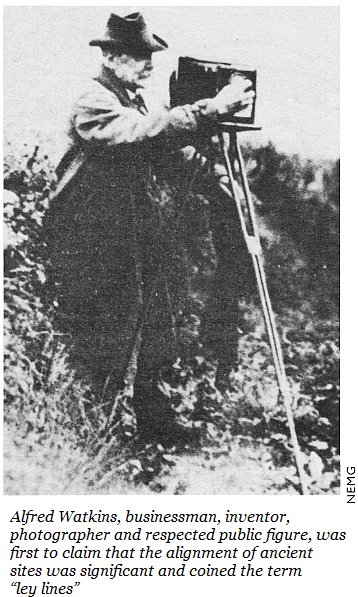
At the beginning of the 20th century archeologist, photographer and brewer Alfred Watkins coined the term ley line to describe avenues of alignment along which ancient natural and man-made monuments existed on a local scale in his native Herefordshire. Those trackways, according to him, marked the paths of human activity. Our neolithic ancestors created them as a byproduct of line-of-sight navigation: prehistoric people made their way across landscape in straight lines, as a result, standing stones, mounts, burial sites, holy wells, cairns, pagan altars are located as landmark points to keep travellers on course. The next post will look at his book "The Old Straight Track".

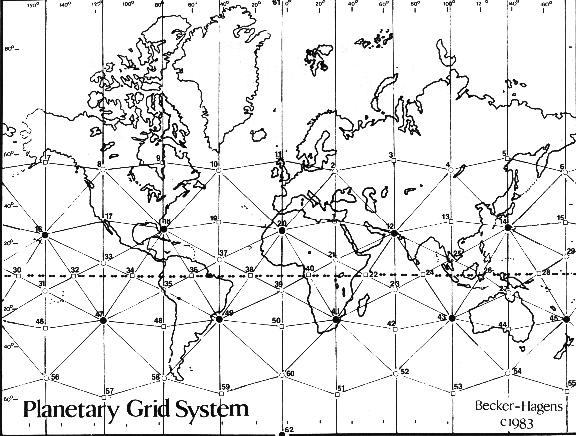


In 1960s the idea was picked up by mystic enthusiasts and ley lines became related to a wide range of phenomena: UFOs, haunted houses, drowsing, time slips, astral projections, vampirism, poltergeist, etc. The current New Age concept of ley lines is not dissimilar to Chinese feng-shui, German heilige linien, Nazaca lines in Peru: they mark concentrated energy paths, which envelope the world in a matrix of power lines, orientated to include Machu Picchu, the Pyramids of Giza, Easter Island, Puma Punku, Lhasa Tibet, the ancient ruins of Mohenjo Daro, Findhorn in Scotland, the Bermuda Triangle, the Arizona vortices, Angkor Wat, numerous obelisks, sacred domed structures around the globe and  intergalactic objects. For an informative overview of various  extraordinary approaches to studying leylines by Paul Devereux see Leys / "Ley Lines”  - an abridged summary of paper given at the "WEGE DES GEISTES - WEGE DER KRAFT (Ways of Spirit - Ways of Power)" conference in October, 1996, in Germany. 

 
Bill Becker and Bethe Hagens grid


Most of literature on ley lines is vague and unmethodical (and this an understatement). As a result, alternative more systematic and exciting projects can be found, for example, Tom Scott’s Magical Mystical Leyline Locator. Scott’s tool is based on principle, that a large number of randomly placed points will inevitably have some of them neatly aligned into a straight line. Not unlike constellations in the sky, it is human predisposition to infer patterns in a large sample of data, which produces the effect of leys. PLEASE TRY!


https://www.tomscott.com/ley/


In regards to our Alignment project, it is the idea of aligned holy sites that excites us the most: the idea of religious ritual being performed in multiple points across the line every day, like an engine, producing a rhythm, reinforcing the time and energy flow, combining those disconnected locations into a system, giving it meaning and purpose. 


NEXT: ON THE OLD STRAIGHT TRACK


Wednesday, 3 February 2016

→ in the gutter


At PAGES book fair in Leeds, March 5-6, we will be presenting GUTTER - our curatorial experiment, which is an investigation into the contextual presence of book as an object and as art object, as well as an investigation into a curated event as a paradigmatic structure. (do come and see for yourself what this sentence actually means!)


As a result, gutter is something I could not help but notice as we were selecting  entries for prescriptions medical humanities and book arts exhibition, due at Beaney House of Art and Knowledge in April later this year.

Here are a few of the artists and their works I have noted down for their use of gutter space.


Wounds by Ruth Shaw-Williams documents some of her mother's many scars left by years of surgery. Ruth is interested in the visual articulation of that which has been hidden.  This involves the archiving of past hurts, coupled with documentation of the point at which they re-surface.


Ashely Fitzgerald considers the idea of the book as if it was a body that came to life with the spine of the book as the back bone and the pages as layers of flesh. The work G.B.S.  addresses her experience with a viral infection called Guillane-Barre Syndrome.


When speaking about gutter it is only appropriate to talk about guts and on innards: a collaborative project between Amanda Couch, Andrew Hladky, Mindy Lee and Richard Nash, which explores the changing conceptualisations of guts and digestion, their impact on the creative process and the role they play in constructing and destabilising our sense of self. The book is very appropriately spilling out of it's encasement with more parts being added to it as the project develops.


Derek's Story by Josie Valley is based on a narrative provided by Derek Cummings. Josie has created a visual response that is empathetic to his expressions of the multimodal experience of chronic illness in contemporary society.


Wednesday, 29 April 2015

the thing the book the codex


You know that feeling - when you have a really really good idea and then it turns out that somebody is either doing it already or - even worse - they had had it long before you. You do, don't you? Good. It is not what this blogpost is about. This blogpost is about a curious and fascinating coincidence that is both wonderful and strange - as agent Cooper would say. You know that old saying, you wait ages for a bus and then two come along at once. This post is about two books.

I recently came across The Thing The Book, published in September 2014 by Chronicle Books in San Francisco. The book was developed by Jonn Herschend and Will Rogan, who are behind The Thing Quaterly - a remarkable assemblage of stuff in a box, conceived by a different artist each time - an enterprise influenced by Aspen's boxes of 1970s.

The Thing The Book is about book as a physical object. It contains contributions from 30 artists - sometimes visual, sometimes verbal - that address different aspects of book. For example, Ed Ruscha did the bookplate, Laurence Weiner did the thumb tab, John Baldessari wrote the epigraph. Then there are articles and visual essays and some beautiful writing, some calligraphy, a flip book, some photography, endnotes, colophon, etc. Some things I enjoyed very much (such as Lucy Pulen's Society of Things, Andrew Hultkrans The fire Time: Razing the Book,  Sarah VanDerBeek Roman Women), while others left me blank (such as Ryan Gander's (Detail from)).

The book is subtitled "Monument to the Book as Object". The authors also say, that the book is "intended to be a physical (and sometimes textual) argument" for book as thing - as their whimsical video suggests: a window support, a chopping board, a coaster. This casual everyday thinginess idea is represented in the promo video, but it is not that explicit in the pages of the book. As for the monumental part - the book is very well executed as an object: every trimming, every part, book detail had been considered visually and conceptually.


However, the most curious thing about the book is, of course, how closely it resembles our Codex: Between This and That. It not just the subject or the structure of the book, it is the content and the look and the general feel of it.* It was conceived at about the same time as ours, except that it was published a year later. You know that old saying, you wait ages for a bus and then two come along at once. This is what this is. 


This wonderful and strange coincidence laid in front of us (CI) last Friday. They have verbal essays and the visual essays! The footnotes! They have the thumb tab too! And the band! And even the yellow!


Oh, I do like The Thing The Book! I believe there is a number of things that are clever and I wish we had used them for our Codex - such as turning elements of book structure into statements/works of art (especially a book mark and a bookplate!); or having Lawrence Weiner to contribute; or printing the book in China, so to achieve this fabulous fabulous quality at a lower cost. On the other had, I have a wicked feeling that I like our Codex better. It is less cluttered, it is clear about the subject and - as a result - it is more consistent as a book. I like the range of our contributors, which covers a broader span of professionals working with books - at various levels of involvement.

However, if I did our Codex again - I would wish to add a bookplate, "printed in China" and a Weiner into it. 


You know that saying, you wait ages for a book to get published and then two come along at once. I do now. This is what this is. 


 * The similarity between then content is not that surprising, I suppose, considering that both books deal with the same subject.


[Egidija]


Wednesday, 25 February 2015

→ between the reader and the world is the lens

An instrument of natural magic may reappear as a philosophical instrument, as an instrument of entertainment, or as a practical "invention" in a new guise" (Hankins and Silverman, 1995)


I. 


and all we are left with is the world
window vinyls and a set of three artists’ books, including viewing devices


On Wednesday, February 25th, 2015 In a Bookshell opens at Milton Gallery @
St Paul's School, SW13 9JT, London. Among many wonderful, innovative, surprising and creepy pieces of bookworks Collective Investigations will also have two pieces on display: 1. between one hand and another (a video installation) and 2. and all we are left with is the world (book installation). This blogpost refers to the first one.

and all we are left with is the world is an installation about perception. It consists of three artist's books and three viewing lenses on the window sill. The books contain scholarly quotes on optics, solipsism, and sensory experience. The lenses guide viewer’s attention to the book and then through it and into the warped space beyond, inviting us to consider the systems of perception as part of our relationship with the surrounding environment.


II.

Books and spectacles go together like horse and carriage, strawberries and cream, oysters and champagne (not quite, but always worth mentioning). Stereotypical geeks carry books and wear glasses. Bill Gates does, for example. Apparently, 53% of university graduates are nearsighted and require reading aids, as compared with 24% of those, who did not even complete secondary education.

Glasses, like books, feature often in portraiture of academically accomplished individuals and those would would wish to be considered as such. For ages men have used spectacles as props to embellish the aura of their professionalism in painting and photographs, says William Rosenthal, a collector of visual aids (Rosenthal, 1996).

and all we are left with is the world (see above ↑ ) deals with the metaphysics of looking through a lense and the sensory-perceptual experience of it. Below, ↓ I will mention a few fun, curious and wonderful devices that are part of the history of spectacles.


Apparently, there is no such thing as concise history of spectacles, because there is no agreement as for who and where invented them. Marco Polo observed elderly Chinese use spectacles in 1270. Chinese claim, that spectacles originated in the 11th century Arabia. (1)  In the meantime, in Europe Vikings were already able to grind lenses out of rock crystal. However, "proper" first spectacles are often attributed to the Italians of the Veneto region. (2)

With the invention of mechanical printing and subsequent rapid growth of publishing industries, the need for reading devices increased and inexpensive spectacles became widely available from peddlers. Finally, in the 1600s the spectacles as we recognise them now were born: the two lenses were finally fixed to a rigid bridge allowing them to stay in place on top on the nose. (1)

Here are a few fun, curious and wonderful devices from the history of spectacles:

a.)
  ↓


From 17th century spectacles were were sold by instrument makers, who also traded in compasses, zograscopes, telescopes and other fantastical "scientific toys", that coexisted together with a range of other more or less useful instruments. Among them, were faceted lenses - multiplying glasses - which were used for entertainment and were treated as a luxury commodity: they were produced in expensive materials and were generously decorated (Stafford and Terpak, 2001).


b.)
 ↓

Another use for faceted lenses came in the form of perspective glass, or vue d'optique, which produced a convincing sense of perspective. The trick was, to have the faceted side of the lens facing the viewer, so the concave produced a slight warping effect to the image beyond it.


 c.)
   ↓

Personally, I find optical fans most fascinating! Some fans had tiny telescopes set into the centers, others had lorgnette frames folding away into the guardsticks. However, the most exciting were spyhole fans. 
For short sight a single concave lens could be mounted in one of the spyholes, effectively forming a Quizzer or Quizzing Glass. This was then further developed into a Galilean telescope by mounting a convex lens in the outer guardstick and a concave lens in the inner guardstick. Lining up the holes in the intervening sticks, when the fan was closed and the blades rested upon one another, produced a simple tube with a lens at each end. The resulting spyglass could even be adjusted for focus by varying the separation of the closed sticks. (3)


III. 

Lens devices used in art, including book art, are varied, but not abundant. Here are a couple of the works that I found most interesting. I have chosen one work of each (kind of) category.


a.) installation lens/vision
  ↓

Haruka Kojin explores the distortion of reality through her piece "Contact Lens". Two types of lenses are used, one completely flat and clear and the other with a warped surface to create interconnected circles of varying sizes. As the light travels through the acrylic, the images on the other side are flipped and contorted, changing the experience of the space. since the elements are clear with no frames or distinct features of its own, the physical material merges into the environment, only visible through the transformation it causes. 
 
b.) installation lens/light
  ↓

IPOcle by Candas Sisman is a light installation produced with lenses, light, mirror, sound, container, and fog. It simulates the way we perceive the physical reality and the various layers, variables, cycles that are present in this process of perceiving. These perceptions draw our perceptual schemas and these schemas in turn shape the reality we perceive. Our perceptions and what we perceive, therefore, constantly reshape call each other into being, as in a vicious cycle. At this point, how can we define what reality really is, what constant can we refer to, and aren’t we supposed to look at this issue in a more holistic and intertwined manner?

c.) book lens/vision
  ↓ 

Strictly speaking, this is not a work that uses lens in the optical sense of it. Artist's book READ by Jackie Batey is about the act of reading. The book was inspired by Our Mutual Friend and takes the first 20 pages of this novel but hides within them a Dickens' quote on reading. The quote describes reading as being like a code, whereby the initiated can open the world of books. The quote is hidden word by word on each page in pale turquoise that can only be seen clearly when viewed through the red lens on of the magnifying glass.

c.) artefacts lens/surprise
  ↓ 


A Glimpse of Heaven by Keith Lo Bue is an optical device made of industrial shop ruler, clockspring, brass, brass hardware, steel, engraving, book end paper, glass bead, lenses, paper, text, soil. Keith Lo Bue's works connect disparate phenomena: reality and surreality; preservation and decay; memory and forgetting.


.

An instrument of natural magic may reappear as a philosophical instrument, as an instrument of entertainment, or as a practical "invention" in a new guise" (Hankins and Silverman, 1995)


 Sources:

(1) Ophthalmic Heritage & Museum of Vision
(2) The College of Optometrisists
(3) Online Museum and Encyclopaedia of Vision Aids 


Hankins, Thomas L. and Robert J. Silverman. 1995. Instruments and the Imagination. Princeton: Princeton Univ. Press. p. 221.
Rosenthal, William J. 1996. Spectacles and Other Vision Aids. San Francisco, CA: Norman Publishing. p. 358.
Strafford, Barbara Maria and Frances Terak (eds.) 2001. Devices of Wonder: from the World in a Box to Image on a Screen. Los Angeles: Getty Publications. p185.

[Egidija]


Wednesday, 10 December 2014

Friday, 17 October 2014

in the reflected sky @ University of Cambridge


Tuesday: vinyls installed, bookmarks placed! Delighted and excited! 
Thanx to Footprint in Cambridge for cutting and installing our vinyls. Thanx to  Casimir Lewy library at University of Cambridge for being so accommodating.

in the reflected sky has been installed as part of Art_Language_Location festival. 


 IN THE REFLECTED SKY

installation and publication

The title in the reflected sky comes from the opening lines of Vladimir Nabokov’s Pale Fire, where the protagonist watches a waxwing fly into the window pane. He further goes on to observe the reflections that project onto outside, suggesting a hint of something beyond in the reflected sky.
in the reflected sky is an arts installation that examines perception of reality through the fluid world of reflections on the window. Window acts as a threshold between two separate worlds of the inside and the outside, that get merged onto its two-dimensional surface as a collage of skies, walls, trees and people. Pane is a magical space, a barrier and a portal into this illusionary world: images on the window look deceptively three-dimensional.
in the reflected sky consists of:
1. window vinyls, that draw on birds’ inability to recognize the phantom world of reflections and our experience of the window as an object and as a space.
2. sky bookmarks, that will punctuate Casimir Lewy Philosophy Library: they will serve as a threshold between Nabokov’s poem and academic writing.
3. a publication will be available for sale at the ALL hub in Waterstones.


Location (window)
Collective Investigations location
Raised Faculty Building
Sidgwick site
CB3 9DA

Directions 
On the large picture window opposite the lawn at the Raised Faculty Building
Opening dates and times
24 hours


Location (bookmarks)
1
Casimir Lewy Library
Faculty of Philosophy
Raised Faculty Building
Sidgwick Avenue
Cambridge
CB3 3DA

Directions
The library is located on the second floor of the Raised Faculty Building. The nearest entrance for the Library is opposite Lady Mitchell Hall.
Opening dates and times
Mon – Fri 9:00 am – 6:00 pm
Sat 10:00 am – 5:00 pm


Location (publication)
Waterstones Bookshop (Top Floor)
22 Sidney Street
CB2 3HG


Links 


Wednesday, 24 September 2014

Group Material / Collective Investigations

In 2010, at the Frieze Art Fair I attended an excellent talk by Julie Ault, one of the founding members of the art collective Group Material. Although l hadn't come across the group before, it was fascinating to hear about the projects they were involved in and the importance of their legacy.

One thing that stuck with me was the way that this ever-changing group of artists seemed to produce such a large body of work with an incredible reach.

The reason the talk came to mind was because Egidija, George and I have been meeting together as Collective Investigations for two years now and the milestone made me reflect on the experience of working as a group.

Detail of window from exhibition at the bookartbookshop.

As with Group Material I feel like Collective Investigations has reached further than we might have on our own. During this past two years we have published a huge artists' book, made and exhibited new art, held public workshops, given a talk at the Victoria and Albert Museum and been selected to have a table at Kaleid. I'm looking forward to the next things on the horizon. For me this work ethic has spilled over into my own individual practice, which also seems to be flourishing.

Workshop materials.

A couple of years ago I came across the book 'Show and Tell: A Chronicle of Group Material', which was released by Ault at the time of the Frieze talk. The thing that came across most strongly from the book was the bureaucracy and the systems that the group put in place to make the whole thing work. It seemed quite a contrast to the talk, as it exposed the extensive, but unseen machinery behind the art. What's interesting to me now (after working as part of a collective myself for two years) is that without regular meetings, talks about finance, long term plans etc, the group wouldn't have had the time, space or energy to create and to make such thoughtful and engaging artworks.

Book: Codex Between This and That

{Chris}

Wednesday, 17 September 2014

the false azure in the windowpane


I went to the V&A to see 'Double Space' this week that forms part of the London Design Festival. I went with the specific aim to see this installation, as we have been talking a lot together about reflections for a piece of work we are putting together for Art Language Location in Cambridge that is coming up in Ocotber. We have been having conversations about what is seen, what is experienced and what is real. Focusing in on a quote from Vladimir Nabokov's 'Pale Fire': 

'I was the shadow of the waxwing slain
By the false azure in the windowpane;' (1)

A bird tricked by the seemingly lifelike reflection of the sky in the window flies straight into it and dies. 

We will be installing work on the widow of the philosophy library, that draws on the dual nature of a widows ability to reflect the world around it and also at the same time to be seen through. It is then our point of perception that interprets this layered reflection and transparency. Pulling apart the different spaces and trying to make sense of them. What is outside the window can appear inside, through its reflection and vice versa. What we are working on has become an exploration in destinguishing the truth of spaces and how we know a reflection as a reflection and the room beyond the window as the room. Nabokov goes on to say: 

'And from inside, too, I'd duplicate
Myself, my lamp, an apple on a plate:
Uncurtaining the night, I'd let dark glass
Hang all the furniture above the grass,
And how delightful when a fall of snow
Covered my glimpse of lawn and reached up so 
As to make chair and bed exactly stand
Upon that snow, out in that crystal land!' (2)

Peter Jones - 'that crystal land' (3)

It suggests that the reflection can construct a parrelel space identical to the one that you are in, confusing the genuineness of the reflection and merging it with what is beyond the glass. 


This brings me nicely to the installation at the V&A. Two large aeroplane wing shapped mirrored pannels are suspended from a structure in the gallery. They are positioned high up in the eaves in the Raphael galleries and rotate in a choreographed pattern. The work has been created by Edward Barber and Jay Osgerby, it reflects everything in the room, the ceiling, the paintings and the people moving about below them. Of the work they say this: “It will amaze the visitor and enable them to appreciate the space in a totally new way, the visitor becomes part of the room for a fleeting moment. Through movement and reflections, the static display of the paintings are brought to life while inviting the viewer and the gallery to be part of the performance.’’ (4)


It is an amazing experience, a mirror that moves like a boat on the sea bobs back and forth reflecting a distorted room. It highlights parts that you may never have noticed before. The ceiling gets pulled down into the room, the floor gets pulled up into the ceiling. Its a strange phenomenon. The room all of a sudden has doubled in size but no extra space has been created. But this doubled space is not a true lifelike representation. The fact that it moves for one, but also the fact that the mirror is curved. the reflection is a distortion. It puts me in mind of the Nabokov quote. The way a window can project a reflection of the room you are in outside, these mirrors rather than project out project into themselves whats below them. Everything is absorbed but unlike the bird in Norbokov's pale fire you are not tricked into the illusion, you can see the room and the reflection in one glance. A double space that is more about the experience rather than the ilusion. Edward Barber says: "We wanted people to come in and take something away that was an experience rather than an analysis of an object." (5) 


You are experiencing the room in a new way and seeing parts you may never have seen before. The artwork that is already in the space almost becomes irrelevant. It is the room that is important and reinterpreting it on that scale is something you have to experience yourself. The reflection brings attention to yourself in relation to this space and you become central to everything. With your interpretation the room stretches out from you in and then again in the reflection 

Through this work and through the Nabokov texts I have learnt that the body is essential to the construction of this experience. It is your perception of the reflection that creates it as a space.

I strongly advise you to go and experience this work for yourself, as there is little you can gain from seeing the images. The design festival runs from 13th to 22nd September. For more information visit: http://www.londondesignfestival.com/ You can see our work in Cambridge from 15th October to 2nd November for more information visit http://artlanguagelocation.wordpress.com/

[George]

1. & 2. NABOKOV, V. Pale Fire. 1962
3. JONES, P. the crystal land. 2012 http://instagram.com/p/QczUo9q-7J/?modal=true