Showing posts with label media. Show all posts

Wednesday, 25 February 2015

→ between the reader and the world is the lens

An instrument of natural magic may reappear as a philosophical instrument, as an instrument of entertainment, or as a practical "invention" in a new guise" (Hankins and Silverman, 1995)


I. 


and all we are left with is the world
window vinyls and a set of three artists’ books, including viewing devices


On Wednesday, February 25th, 2015 In a Bookshell opens at Milton Gallery @
St Paul's School, SW13 9JT, London. Among many wonderful, innovative, surprising and creepy pieces of bookworks Collective Investigations will also have two pieces on display: 1. between one hand and another (a video installation) and 2. and all we are left with is the world (book installation). This blogpost refers to the first one.

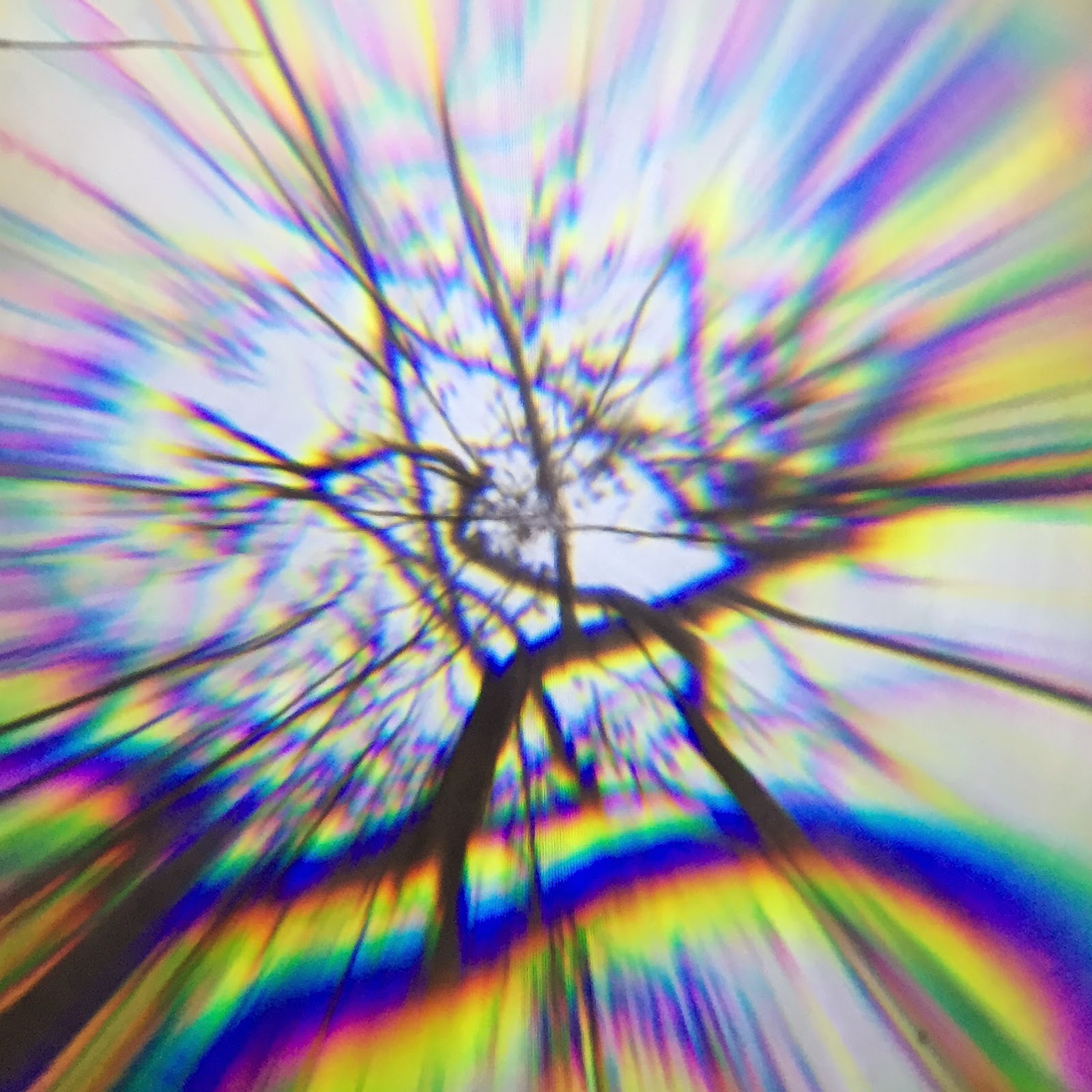
and all we are left with is the world is an installation about perception. It consists of three artist's books and three viewing lenses on the window sill. The books contain scholarly quotes on optics, solipsism, and sensory experience. The lenses guide viewer’s attention to the book and then through it and into the warped space beyond, inviting us to consider the systems of perception as part of our relationship with the surrounding environment.


II.

Books and spectacles go together like horse and carriage, strawberries and cream, oysters and champagne (not quite, but always worth mentioning). Stereotypical geeks carry books and wear glasses. Bill Gates does, for example. Apparently, 53% of university graduates are nearsighted and require reading aids, as compared with 24% of those, who did not even complete secondary education.

Glasses, like books, feature often in portraiture of academically accomplished individuals and those would would wish to be considered as such. For ages men have used spectacles as props to embellish the aura of their professionalism in painting and photographs, says William Rosenthal, a collector of visual aids (Rosenthal, 1996).

and all we are left with is the world (see above ↑ ) deals with the metaphysics of looking through a lense and the sensory-perceptual experience of it. Below, ↓ I will mention a few fun, curious and wonderful devices that are part of the history of spectacles.


Apparently, there is no such thing as concise history of spectacles, because there is no agreement as for who and where invented them. Marco Polo observed elderly Chinese use spectacles in 1270. Chinese claim, that spectacles originated in the 11th century Arabia. (1)  In the meantime, in Europe Vikings were already able to grind lenses out of rock crystal. However, "proper" first spectacles are often attributed to the Italians of the Veneto region. (2)

With the invention of mechanical printing and subsequent rapid growth of publishing industries, the need for reading devices increased and inexpensive spectacles became widely available from peddlers. Finally, in the 1600s the spectacles as we recognise them now were born: the two lenses were finally fixed to a rigid bridge allowing them to stay in place on top on the nose. (1)

Here are a few fun, curious and wonderful devices from the history of spectacles:

a.)
  ↓


From 17th century spectacles were were sold by instrument makers, who also traded in compasses, zograscopes, telescopes and other fantastical "scientific toys", that coexisted together with a range of other more or less useful instruments. Among them, were faceted lenses - multiplying glasses - which were used for entertainment and were treated as a luxury commodity: they were produced in expensive materials and were generously decorated (Stafford and Terpak, 2001).


b.)
 ↓

Another use for faceted lenses came in the form of perspective glass, or vue d'optique, which produced a convincing sense of perspective. The trick was, to have the faceted side of the lens facing the viewer, so the concave produced a slight warping effect to the image beyond it.


 c.)
   ↓

Personally, I find optical fans most fascinating! Some fans had tiny telescopes set into the centers, others had lorgnette frames folding away into the guardsticks. However, the most exciting were spyhole fans. 
For short sight a single concave lens could be mounted in one of the spyholes, effectively forming a Quizzer or Quizzing Glass. This was then further developed into a Galilean telescope by mounting a convex lens in the outer guardstick and a concave lens in the inner guardstick. Lining up the holes in the intervening sticks, when the fan was closed and the blades rested upon one another, produced a simple tube with a lens at each end. The resulting spyglass could even be adjusted for focus by varying the separation of the closed sticks. (3)


III. 

Lens devices used in art, including book art, are varied, but not abundant. Here are a couple of the works that I found most interesting. I have chosen one work of each (kind of) category.


a.) installation lens/vision
  ↓

Haruka Kojin explores the distortion of reality through her piece "Contact Lens". Two types of lenses are used, one completely flat and clear and the other with a warped surface to create interconnected circles of varying sizes. As the light travels through the acrylic, the images on the other side are flipped and contorted, changing the experience of the space. since the elements are clear with no frames or distinct features of its own, the physical material merges into the environment, only visible through the transformation it causes. 
 
b.) installation lens/light
  ↓

IPOcle by Candas Sisman is a light installation produced with lenses, light, mirror, sound, container, and fog. It simulates the way we perceive the physical reality and the various layers, variables, cycles that are present in this process of perceiving. These perceptions draw our perceptual schemas and these schemas in turn shape the reality we perceive. Our perceptions and what we perceive, therefore, constantly reshape call each other into being, as in a vicious cycle. At this point, how can we define what reality really is, what constant can we refer to, and aren’t we supposed to look at this issue in a more holistic and intertwined manner?

c.) book lens/vision
  ↓ 

Strictly speaking, this is not a work that uses lens in the optical sense of it. Artist's book READ by Jackie Batey is about the act of reading. The book was inspired by Our Mutual Friend and takes the first 20 pages of this novel but hides within them a Dickens' quote on reading. The quote describes reading as being like a code, whereby the initiated can open the world of books. The quote is hidden word by word on each page in pale turquoise that can only be seen clearly when viewed through the red lens on of the magnifying glass.

c.) artefacts lens/surprise
  ↓ 


A Glimpse of Heaven by Keith Lo Bue is an optical device made of industrial shop ruler, clockspring, brass, brass hardware, steel, engraving, book end paper, glass bead, lenses, paper, text, soil. Keith Lo Bue's works connect disparate phenomena: reality and surreality; preservation and decay; memory and forgetting.


.

An instrument of natural magic may reappear as a philosophical instrument, as an instrument of entertainment, or as a practical "invention" in a new guise" (Hankins and Silverman, 1995)


 Sources:

(1) Ophthalmic Heritage & Museum of Vision
(2) The College of Optometrisists
(3) Online Museum and Encyclopaedia of Vision Aids 


Hankins, Thomas L. and Robert J. Silverman. 1995. Instruments and the Imagination. Princeton: Princeton Univ. Press. p. 221.
Rosenthal, William J. 1996. Spectacles and Other Vision Aids. San Francisco, CA: Norman Publishing. p. 358.
Strafford, Barbara Maria and Frances Terak (eds.) 2001. Devices of Wonder: from the World in a Box to Image on a Screen. Los Angeles: Getty Publications. p185.

[Egidija]


Wednesday, 14 January 2015

#cybertext

↓↓↓


Generally, I prefer reading straightforward linear texts in straightforward linear books page by page in a non-confusing arrangement of thoughts where one idea follows another. Unfortunately, as I look around myself at this very moment I can see two open books to the left, a small pile of photocopied pages to the right, an iPad, a laptop and my notes all annotated, cross-referenced and collated to accompany my re-reading of Katherine’s Hayle’s Writing Machines (Mediaworks Pamphlet) . My reading, in fact, is an act of multilayered and multicursal pathway of linking, reading, connecting, proceeding. How very appropriate for this book, I suppose. 
How cybertextual!

The term cybertext was coined by Espen Aarseth in Cybertext: Perspectives on Ergodic Literature (1997). Regardless of what it may sound like, cybertext is not a genre of literary or digital text, it is not a type of link or hypertext (even though hypertext can be present in cybertext) - cybertext is an approach to "communicational strategies of dynamic texts". The term itself is confusing in many ways (no clear definition, broad area of application, some ambiguous terminology - such as trivial/nontrivial effort), one thing is certain, though - it is not media, period or genre specific. It is about communication, interaction, performance within the text and with the text - it is not about literary or visual style.
"The concept of cybertext focuses on the mechanical organization of the text, by positing the intricacies of the medium as an integral part of the literary exchange. However, it also centers attention on the consumer, or user, of the text, as a more integrated figure than even reader-response theorists would claim.
...cybertext is used here to describe a broad textual media category. It is not in itself a literary genre of any kind. Cybertexts share a principle of calculated production, but beyond that there is no obvious unity of aesthetics, thematics, literary history, or even material technology. Cybertext is a perspective I use to describe and explore the communicational strategies of dynamic texts.(Espen Aarseth, Cybertext: Perspectives on Ergodic Literature )

↓↓↓


One of the examples of cybertext, that Aarseth gives himself is i-Ching (The Book of Changes) - an ancient Chinese divination book. Six yarrow stalks or tossed coins are used to determine the pattern of broken and unbroken lines in the hexagram. The pattern is then looked up in the book and the prophesy is read out for interpretation. The book does not form a linear narrative, but a multitude of possibilities and paths to navigate through.
Here is one of the online i-Ching reading sites  →  易經.


↓↓↓


 Vladimir Nabokov's Pale Fire is another work that Aarseth mentions as a cybertext. Pale Fire consists of a 999-line poem, written by the fictional John Shade, with a foreword and lengthy line-by-line commentary by a neighbor and academic colleague of the poet, Charles Kinbote. Aarseth suggests, that a reader can choose between a linear or non-linear reading of the work, i.e. to read the poem first and then notes as one sequential story; or to keep jumping between the annotations and the poem.


↓↓↓


http://nightingalesplayground.com/

Nightingale’s Playground is a piece digital fiction by Andy Campbell and Judi Alston. It is an extraordinary interlinked work in four parts: a browser based read/walk-through, an e-book text, a virtual exercise book, a downloadable 3D immersive experience of Alex's house. The reader discovers the story himself through exploration of those four spaces.


↓↓↓

http://mitpress.mit.edu/sites/default/files/titles/content/mediawork/titles/writing/writing_webtake/index.html

Here is one more beautifully produced piece of digital art! Hollowbound Book by Erik Loyer is an interactive response to N. Katherine Hayles’ book Writing Machines, in which a newly liberated book binding testifies to its liberation at the hands of Hayles’ theories. It is not a cybertext in it's own right (for what I understood about cybertexts). However, it can be considered part of cybertext that N. Katherine Hayles’ Writing Machines (Mediaworks Pamphlet) is - a book that exists as an elegantly designed 3D object (also available as a PDF for a less elegant DIY binding) and an extension of the book Web Supplement, which includes the lexicon linkmap, notes, index, bibliography, errata, and source material. The reader/user can explore alternative mappings of the book's conceptual terrain with additional functionalities unavailable in print, then print insert pages to customize the book itself. 


↓↓↓


Children's books - like artist's books - often allow themselves the sort of ingenuity that adult books do not. A few blogposts behind I mentioned Myriorama or tableau polyoptique - a form of cards entertainment that became especially popular in the 19th century: a child was able to arrange and re-arrange the cards into any order to build visual narratives. Similarly, my own children in their own time could not have enough of Mixed Up Fairy Tales (Mixed Up Series) - a lighthearted contemporary split page book, where a child can make up their own stories using starting lines, names, events from well known fairy tales. It is the book that provided me with hours of piece on the plane - cybertext or not.


↓↓↓

Aarseth's cybertext is an idea of a multicursal text, which allows readers to biuld their own path though the labyrinth of reading - for example, through a possibility of physical rearrangement of narrative modules. Some of those objects mentioned above are books, while others are games or "whatever they are" (my very very favorite quote by Johanna Drucker in relation to digital book models). As cybertexts, they are a form of text - a text, which is a big metaphorical leap away from it's definition in linguistics. As reader-led narratives, they are a form of story-telling tradition.


PS. The idea of cybertext is  confusing in many ways - as I have mentioned above. I would be happy to hear from anyone with useful links on the subject.


A curious note that had no space in the text above:

At the start of the book Aarseth cites Penelope Reed Doobs discussion on physical and metaphorical labyrinths of classical antiqity and Middle Ages. She distinguishes two types of labyrinth paths: "unicursal, where there is only one path, winding and turning, usually toward a center; and the multicursal, where the maze wanderer faces a series of critical choices". The two ideas of labyrinth have co-existed until Renaissance, until the concept was "reduced to the multicursal paradigm that we recognise today". As a result we have since grown to regard linear and labyrinth and incompatible ideas.

  [Egidija]


Wednesday, 3 December 2014

scrolling gadgets {moving panoramas}

http://www.frieze.com/issue/review/tomas_saraceno/
Tomas Saraceno, Cumulus at Barbican


↓↓↓

Some time ago I wrote a post digitised scrolls: from the Pond at Deuchar to the Trip to London, at the bottom of which I mentioned a charming Georgian device Trip to London that had been digitised by Princeton University. Trip to London is a box containing a twelve plate scroll that displays a humorous story of a honeymoon trip. It is a close development of the very popular moving panoramas, which came to Europe in late 17th century and by early 19th century they were so common, that there were even ladies' fans with miniature scrolled pictures incorporated into the designs. 


Trip to London

↓↓↓


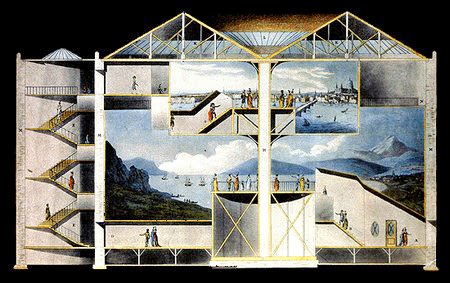
Moving panorama - to put it simply - is a long panorama in a scroll, which has ends of it attached to two rods. The handles on the rods are then turned to allow the panorama to move across the screen, very much like a basic animation film. Moving panoramas were available in handheld scrolling devices as well as a form of large screen/stage entertainment. They were hugely popular: successful shows drew crowds and boasted years of performances. For example, Albert Smith's Ascent of Mont Blanc was performed for seven years at the Egyptian Hall in London, while Hugo d'Alesi's Mareorama allowed seven hundred spectators per viewing of this show, that offered a multisensory sea voyage illusion, complete with thunder, wind and local dancers.


a card promoting Hugo d'Alesi's Mareorama


Moving panoramas were extraordinary pieces of engineering. They often featured special enhanced sets and effects, merging of medias and mediums into one immersive spectacle. For example, touring panoramas of the late nineteen century England frequently included such novelties as mechanical puppets and slide projections. The most impressive ones, of course, were present at Exposition Universelle in Paris, 1900. The above mentioned Hugo d'Alesi's Mareorama incorporated two screens, each 2,500 feet long and forty feet in height, which were scrolled for the viewers present on board of the full size boat. The boat required hydraulic piston engines and pumps driven by electric motors to stimulate motion. 


Hugo d'Alesi's Mareorama


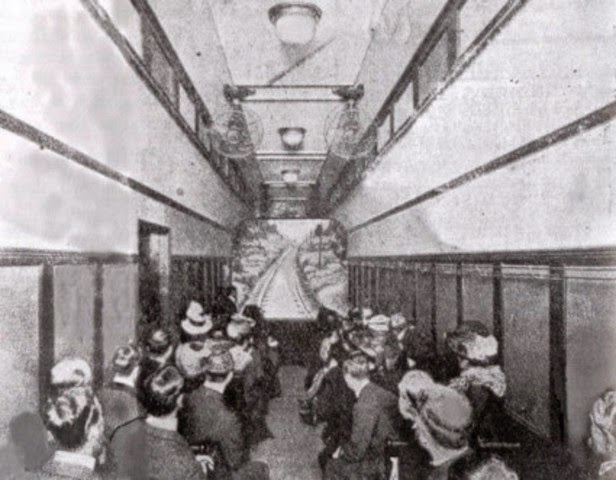
Another immersive panorama at Exposition Universelle in Paris was Pavel Yakovlevich Pyasetsky's Great Siberian Railway Panorama in the Russian pavilion. It offered a 45 minute experience of Trans Siberian rail journey complete with stuffed polar bears on papier-mache icebergs, a dinner of caviar and sturgeon in a luxury imitation train with a library, gymnasium, marble bath, smoking and music salons.


This 45-minute experience was an essay in detail. It offered a chance to experience the 14-day journey by rail from Moscow to Peking, a 6300-mile journey over tracks not yet completed at the time of the Paris Fair of 1900.
There were three realistic railway cars, each 70 feet long, with saloons, dining rooms, bars, bedrooms, and other elements of a luxury train. Totally detailed and lavishly equipped, the cars were elevated a little above a place for spectators in conventional rows of seats. The gallery faced a stage-like arena where the simulated views along the train trip were presented by an inventive contraption.
The immediate reality of a vehicular trip is that nearby objects seem to pass by more rapidly than distant ones. So, nearest to the participants was a horizontal belt covered with sand, rocks, and boulders, driven at a speed of 1000 feet per minute! Behind that was a low vertical screen painted with shrubs and brush, travelling at 400 feet per minute. A second, slightly higher screen, painted to show more distant scenery, scrolled along at 130 feet per minute. The most distant one, 25 feet tall and 350 feet long painted with mountains, forests, clouds and cities, moved at 16 feet per minute.
Real geographical features along the way were depicted on this screen: Moscow, Omsk, Irkutsk, the shores of great lakes and rivers, the Great Wall of China, and Peking. The screens, moving in one direction only, were implemented as a belt system. Due to the inexact speeds of the scenery,the 'journey' never repeated itself exactly, providing an ever-changing combination of scenes and a reason to pay to see the attraction again.  (from The Past Was No Illusion  by Walt Bransford)


Pavel Yakovlevich Pyasetsky's Great Siberian Railway Panorama

↓↓↓


Apart from the great spectacles at Exposition Universelle, 1900, there was a range of other - more common and more humble - weird and wonderful panorama devices. There existed pleoramas, dioramas, padoramas, myrioramas, phantom rides for public viewing as well as personal hand panorama reels, magic lanterns and peep-shows.


http://dip9.aaschool.ac.uk/references/
The Kaiserpanorama, 1900
http://motherboard.vice.com/en_uk/blog/remembering-the-human-gopros-that-gave-the-world
Phantom Ride
https://ore.exeter.ac.uk/repository/handle/10472/2843
Rotunda, Leicester Square
https://ore.exeter.ac.uk/repository/handle/10472/212
Coronation Procession of King George IV
https://ore.exeter.ac.uk/repository/handle/10472/4717
Tableau of the procession at the Queen's coronation June 28, 1838
http://writhingsociety.blogspot.co.uk/2010/02/myriorama.html
Myriorama or tableau polyoptique by Jean-Pierre Brès
(a set of cards that can be arranged in any order)


↓↓↓


Here are a few of the contemporary moving panoramas that range between overwhelming digital installations of Tomas Saraceno to painted paper scrolls of Adam Cvijanovic.

http://helendouglas.onlineculture.co.uk/ttp/ttp.html
Helen Douglas, The Pond at Deuchar
http://www.frieze.com/issue/review/tomas_saraceno/
Tomas Saraceno, Cumulus at Barbican
https://erindziedzic.files.wordpress.com/2013/09/rolling-panaorama-1_cvijanovic.jpg
Adam Cvijanovic, Rolling Panorama Number 1
http://upload.wikimedia.org/wikipedia/commons/8/8d/Panoramic_View_of_Old_City_lane_%28Pole%29_Ahmedabad.jpg
Panorama of Achmedabad


 ↓↓↓


The Trip to London scroll box is a story telling gadget that bridged book and upcoming cinema. It's situation is not dissimilar to the hybrid publishing projects emerging today as a result of media arts niche-ing themselves into the book market, such as FakePress and HybridBook. Moving panoramas were defeated by the cinema, of course. Which of the contemporary story telling gadgets are going to stay?


↓↓↓


Printed book sources:
- Schwartz, Vanessa. Spectacular Realities: Early Mass Culture in Fin-de-siecle Paris . Berkeley: University of California Press, 1998.


[Egidija]