Wednesday, 4 March 2015

marbled pages


Vintage 19th c. marbled paper, Gloster pattern. A


Continuing my theme on printing techniques and methods of production I'm going to write about marbling. While being beautiful it is also really interesting and most of us I imagine are familiar with seeing it as endpapers in books. 


Marblers at work and illustrations of marbling equipment. B


The basics of marbling is to float coloured inks on water and then manipulate them into a pattern. Paper is then applied to the surface of the water and a print is taken.


Two pages of waka poems by Ōshikōchi Mitsune (859?-925?) C


One of the oldest examples of marbled paper is from this manuscript. Here are two pages of waka poems by Ōshikōchi Mitsune (859?-925?). 20cm height, 32cm wide. Silver, Gold, Color, and ink on suminagashi paper. From a copy of the Sanjurokunin Kashu or "Thirty-Six Immortal Poets" kept in the Hongan-ji Temple, Kyoto. It was presented to the Emperor Shirakawa on his sixtieth birthday in 1118 C.E. 1.

An early possible reference to marbling is found in a compilation completed in 986 CE called: 文房四谱 Wen Fang Si Pu or "Four Treasures of the Scholar's Study" edited by the 10th century scholar-official 蘇易簡 Su Yijian (957-995 CE). 
This compilation contains information on inkstick, inkstone, ink brush, and paper in China, which are collectively called the four treasures of the study. The text mentions a kind of decorative paper called 流沙箋 liu sha jian meaning “drifting-sand” or “flowing-sand notepaper" that was made in what is now the region of Sichuan. 2.

Sheets of silhouette and marbled papers from an Album Amicorum, Prague 1600. D


Fast forward to the 17th century and marbled paper comes to Europe through travelers from the middle east who collected marbled papers in books called 'Album Amicorum'. These albums acted like scrapbooks or travel journals and contain a wide variety of Turkish of Persian marbled papers. 3.


Album Amicorum of Marcus Conrad von Rehlingen E


The art of marbling became increasing popular by the 19th century and books were published exploring this art form like: Charles Woolnough's: The Art of Marbling (1853).


The Whole Art of Marbling as Applied to Paper, Book Edges, etc. Charles W. Woolnough, 1881 F


As well as its purely decorative use marbled paper has some interesting and creative outlets in book arts and in literature. One most famous one is Laurence Stere's 'The Life and Opinions of Tristram Shandy, Gentleman'. One marble page appears in the book. This mysterious page at the time must have been sensational. In 1759 peoples contact, especially in Britain to marbled papers would have been very limited,  'commercial production in England did not begin until the 1770s' 3.


The marbled page from the first edition of Tristram Shandy. G


But the marbled page has significance to the book, in the page opposite sterne tells the reader that the next marbled page is the 'motly emblem of my work'—the page communicating visually that his work is endlessly variable, endlessly open to chance." 4.


Various editions of Tristram Shandy, showing the variety of the marbled page. G


In each edition of the book the marbled page is different. "Each marbling is unique, as is each reading of Tristram Shandy. It is fitting that your copy of Tristram Shandy is different from mine, since your subjective experience of the book is different." 5.

For more information on the variety of marbled papers visit: http://content.lib.washington.edu/dpweb/patterns.html who hold a great digital resource of marbled paper types. 


[George]


References:

1. Chambers, Ann (1991). Suminagashi: The Japanese Art of Marbling. Thames & Hudson
2. Su, Yijian. (2008). Wen Fang Si Pu. Shi dai wen yi chu ban she
3. Wolfe, R. (1990). Marbled Paper: It's History, Techniques, and Patterns: with Special Reference to the relationship of Marbling to Bookbinding in Europe and the Western World.
4. Sterne, L (1759) The Life and Opinions of Tristram Shandy, Gentleman
5. De Voogd, P. Laurence Sterne, the marbled page, and ‘the use of accidents’,” in A Journal of Verbal/Visual Enquiry

Illustrations:

A. http://digitalcollections.lib.washington.edu/cdm/singleitem/collection/dp/id/71/rec/10
B.  l'Encyclopedie of Denis Diderot and Jean le Rond d'Alembert. Vol. IV p. 275-6 (1768).
C. http://en.wikipedia.org/wiki/Paper_marbling#mediaviewer/File:36poets_collection_MITSUNE1.JPG
D. http://goran.baarnhielm.net/Islam/stambok.jpg
E. http://www.rarebooksdigest.com/wp-content/uploads/2012/10/marble-Album-Amicorum2.jpg
F. http://www.metmuseum.org/collection/the-collection-online/search/591856
G. http://www.laurencesternetrust.org.uk/exhibition.php?id=100

Wednesday, 25 February 2015

→ between the reader and the world is the lens

An instrument of natural magic may reappear as a philosophical instrument, as an instrument of entertainment, or as a practical "invention" in a new guise" (Hankins and Silverman, 1995)


I. 


and all we are left with is the world
window vinyls and a set of three artists’ books, including viewing devices


On Wednesday, February 25th, 2015 In a Bookshell opens at Milton Gallery @
St Paul's School, SW13 9JT, London. Among many wonderful, innovative, surprising and creepy pieces of bookworks Collective Investigations will also have two pieces on display: 1. between one hand and another (a video installation) and 2. and all we are left with is the world (book installation). This blogpost refers to the first one.

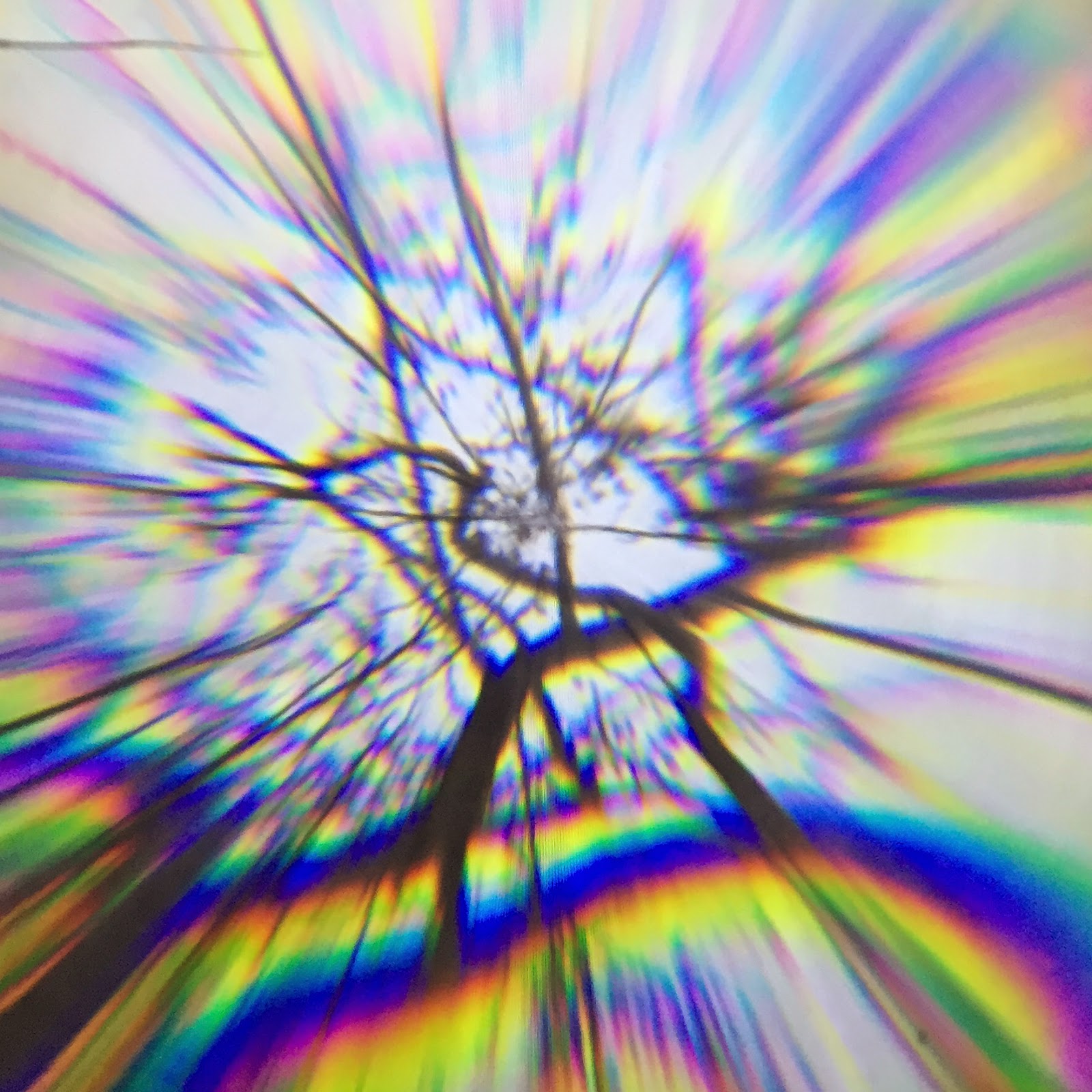
and all we are left with is the world is an installation about perception. It consists of three artist's books and three viewing lenses on the window sill. The books contain scholarly quotes on optics, solipsism, and sensory experience. The lenses guide viewer’s attention to the book and then through it and into the warped space beyond, inviting us to consider the systems of perception as part of our relationship with the surrounding environment.


II.

Books and spectacles go together like horse and carriage, strawberries and cream, oysters and champagne (not quite, but always worth mentioning). Stereotypical geeks carry books and wear glasses. Bill Gates does, for example. Apparently, 53% of university graduates are nearsighted and require reading aids, as compared with 24% of those, who did not even complete secondary education.

Glasses, like books, feature often in portraiture of academically accomplished individuals and those would would wish to be considered as such. For ages men have used spectacles as props to embellish the aura of their professionalism in painting and photographs, says William Rosenthal, a collector of visual aids (Rosenthal, 1996).

and all we are left with is the world (see above ↑ ) deals with the metaphysics of looking through a lense and the sensory-perceptual experience of it. Below, ↓ I will mention a few fun, curious and wonderful devices that are part of the history of spectacles.


Apparently, there is no such thing as concise history of spectacles, because there is no agreement as for who and where invented them. Marco Polo observed elderly Chinese use spectacles in 1270. Chinese claim, that spectacles originated in the 11th century Arabia. (1)  In the meantime, in Europe Vikings were already able to grind lenses out of rock crystal. However, "proper" first spectacles are often attributed to the Italians of the Veneto region. (2)

With the invention of mechanical printing and subsequent rapid growth of publishing industries, the need for reading devices increased and inexpensive spectacles became widely available from peddlers. Finally, in the 1600s the spectacles as we recognise them now were born: the two lenses were finally fixed to a rigid bridge allowing them to stay in place on top on the nose. (1)

Here are a few fun, curious and wonderful devices from the history of spectacles:

a.)
  ↓


From 17th century spectacles were were sold by instrument makers, who also traded in compasses, zograscopes, telescopes and other fantastical "scientific toys", that coexisted together with a range of other more or less useful instruments. Among them, were faceted lenses - multiplying glasses - which were used for entertainment and were treated as a luxury commodity: they were produced in expensive materials and were generously decorated (Stafford and Terpak, 2001).


b.)
 ↓

Another use for faceted lenses came in the form of perspective glass, or vue d'optique, which produced a convincing sense of perspective. The trick was, to have the faceted side of the lens facing the viewer, so the concave produced a slight warping effect to the image beyond it.


 c.)
   ↓

Personally, I find optical fans most fascinating! Some fans had tiny telescopes set into the centers, others had lorgnette frames folding away into the guardsticks. However, the most exciting were spyhole fans. 
For short sight a single concave lens could be mounted in one of the spyholes, effectively forming a Quizzer or Quizzing Glass. This was then further developed into a Galilean telescope by mounting a convex lens in the outer guardstick and a concave lens in the inner guardstick. Lining up the holes in the intervening sticks, when the fan was closed and the blades rested upon one another, produced a simple tube with a lens at each end. The resulting spyglass could even be adjusted for focus by varying the separation of the closed sticks. (3)


III. 

Lens devices used in art, including book art, are varied, but not abundant. Here are a couple of the works that I found most interesting. I have chosen one work of each (kind of) category.


a.) installation lens/vision
  ↓

Haruka Kojin explores the distortion of reality through her piece "Contact Lens". Two types of lenses are used, one completely flat and clear and the other with a warped surface to create interconnected circles of varying sizes. As the light travels through the acrylic, the images on the other side are flipped and contorted, changing the experience of the space. since the elements are clear with no frames or distinct features of its own, the physical material merges into the environment, only visible through the transformation it causes. 
 
b.) installation lens/light
  ↓

IPOcle by Candas Sisman is a light installation produced with lenses, light, mirror, sound, container, and fog. It simulates the way we perceive the physical reality and the various layers, variables, cycles that are present in this process of perceiving. These perceptions draw our perceptual schemas and these schemas in turn shape the reality we perceive. Our perceptions and what we perceive, therefore, constantly reshape call each other into being, as in a vicious cycle. At this point, how can we define what reality really is, what constant can we refer to, and aren’t we supposed to look at this issue in a more holistic and intertwined manner?

c.) book lens/vision
  ↓ 

Strictly speaking, this is not a work that uses lens in the optical sense of it. Artist's book READ by Jackie Batey is about the act of reading. The book was inspired by Our Mutual Friend and takes the first 20 pages of this novel but hides within them a Dickens' quote on reading. The quote describes reading as being like a code, whereby the initiated can open the world of books. The quote is hidden word by word on each page in pale turquoise that can only be seen clearly when viewed through the red lens on of the magnifying glass.

c.) artefacts lens/surprise
  ↓ 


A Glimpse of Heaven by Keith Lo Bue is an optical device made of industrial shop ruler, clockspring, brass, brass hardware, steel, engraving, book end paper, glass bead, lenses, paper, text, soil. Keith Lo Bue's works connect disparate phenomena: reality and surreality; preservation and decay; memory and forgetting.


.

An instrument of natural magic may reappear as a philosophical instrument, as an instrument of entertainment, or as a practical "invention" in a new guise" (Hankins and Silverman, 1995)


 Sources:

(1) Ophthalmic Heritage & Museum of Vision
(2) The College of Optometrisists
(3) Online Museum and Encyclopaedia of Vision Aids 


Hankins, Thomas L. and Robert J. Silverman. 1995. Instruments and the Imagination. Princeton: Princeton Univ. Press. p. 221.
Rosenthal, William J. 1996. Spectacles and Other Vision Aids. San Francisco, CA: Norman Publishing. p. 358.
Strafford, Barbara Maria and Frances Terak (eds.) 2001. Devices of Wonder: from the World in a Box to Image on a Screen. Los Angeles: Getty Publications. p185.

[Egidija]


Wednesday, 18 February 2015

Books, Technology and Non-Linear Narrative

With the changes that digital technology I have been interesting in how existing books could or have been given an interesting new electronic life. Literary works such as Fernando Pessoa’s The Book of Disquiet (a collection of hundreds of random snippets of ideas and thoughts) and ItaloCalvino’s Invisible Cities (a series of described cities, linked round a central narrative) may be even better suited to the digital realm - loosening the tether of linearity that holds them down in their printed editions.


A project which highlights the potential of the iPad as a technology is a book called The Waste Land, based on T. S. Eliot’s poem and designed by Touch Press for Faber and Faber.  The app simply and elegantly presents the full text of Eliot’s poem on the dazzling white LED screen.  Clicking on the text of the poem the reader can access an abundance of additional content; readings of the poems; annotations; Eliot’s original manuscript; a filmed performance of the text, and; photographs that relate to the poem.  Although the poem follows its original linear form, these additional materials add additional layers, creating a different kind of depth to the work.


Still from the Waste Land App

Although it could be argued that Eliot’s poem was created to stand on its own, these supporting materials provide multiple access points into the text, giving a richer understanding of the context in which the poem was written and clues as to how it might sound spoken aloud.  The abundance of materials also lends The Waste Land a sense of authority, an authority that the poem may no longer have to contemporary readers, over 40 years after the author’s death.

In recent years a buzz word has appeared that describes stories that are told across a range of media.  This word is transmedia and it defines a single story that may begin in one media form (such as a book) and continue through other media forms (such as blog posts, TV adverts, audio CDs).  Often transmedia has been used to create tie-ins and advertise products, however The Waste Land is a good example of how the technique may be used neatly within a single product to build on the original story and engage the reader.

In order to understand why these types interactive and immersive books are becoming popular, it is useful to understand the changes that have been happening in the way we read books and interact within the wider world.

In his essay If it Isn’t on the Internet it Doesn’t Exist, Mark Perlman remarks on a change he noticed in the way his students read books and scholarly documents, pointing out a tendency of students to skim the material instead of immersing themselves in it.  This trend was also highlighted by Sven Birkerts ten years before suggesting that advancements in digital technology were changing the way his students perceived the world. Birkerts marked out these perceived changes in terms of gains and losses:

“The gains for electronic postmodernity could be said to include for individuals, (a) an increased awareness of the “big picture”, a global perspective that admits the extraordinary complexity of interrelations; (b) an expanded neural capacity, an ability to accommodate a broad range of stimuli simultaneously; (c) relativistic comprehension of situations that promotes the erosion of the old biases and often expresses itself as tolerance; and (d) a matter of fact and unencumbered sort of readiness, a willingness to try new situations and arrangements.

In the loss column, meanwhile, are (a) a fragmented sense of time and a loss of the so-called durational experience, that depth phenomena we associate with reverie; (b) a reduced attention span and a general impatience with sustained enquiry; (c) a shattered faith in institutions and in explanatory narratives that formerly gave shape to subjective experience; (d) a divorce from the past, from a vital sense of history as a cumulative or organic process, (e) an estrangement from geographic place and community, and (f) an absence of any strong vision of personal or collective future.”

Birkets’ insight provides us with a rich and fascinating snapshot of the reader in the digital age, suggesting that younger generations may process information and experience in a very different way to their elders.  Noting his speculations about readers being aware of the “Bigger Picture”, accommodating a broader range of stimuli, having a fragmented sense of time and a reduced attention span, it is not difficult to see how the current incarnation The Waste Land may both be better suited to the sensibility of the contemporary reader, allowing them to engage with the content in a more holistic way.

{Chris}

Wednesday, 11 February 2015

photocopy/photocopy

I would like to start exploring books around certain printing techniques or methods of production and I am going to start with the humble photocopier. Most of us, I am sure have had contact with one and maybe some of us have also made books by using one. It is the instant and cheap nature of this early 'print on demand' process that attracts artists, zine makers and activists to use it. “The copier was pretty revolutionary in its time, It allowed artists to print an image on their own in an instant. It allowed them to publish books. The speed and ease were liberating. That was a key to a lot of these works." (Michelle Cotton talking on an exhibition of photocopied works at firstsite http://www.firstsite.uk.net/page/xerography-2)


Invented in 1938 by Chester Carlson 'Xerography'  is a dry photocopying technique that requires no chemicals and uses an electrostatic process to transfer toner to paper. (http://en.wikipedia.org/wiki/Xerography)


Chester Carlsons lab book (a history of the book in 100books)


There are many books that use photocopies but I am going to focus on three:

_____

Sigmar Polke - Daphne


The artists hand is used to manipulate the image as it is scanned giving a painterly effect to the image. The artists hand can control or manipulate the image in collaboration with the photocopier. The photocopier reproduces in a mechanical fashion, but introduce movement you can make an image that contains a human element of chance.

"Created directly by Polke himself, Daphne is a book with 23 chapters illustrated in large-format photocopies. Each "copy" of the book differs, as each has been photocopied and manipulated individually, pulled from the machine by the hand and watchful eye of the artist.  Process is revealed, over and over again. Motifs accumulate page after page, as do small graphic cycles. The printed dot, the resolution, the subject, and the speed all determine and are determined by the apparently unpredictable and often impenetrable secret of a picture whose drafts are akin to the waste products of a copying machine." (Reiner Speck, http://greg.org/archive/2010/06/19/daphne_as_photocopied_by_sigmar_polke.html)


_____

Roland Brauchli - Un coup de des...


(http://rolandbrauchli.blogspot.co.uk/2009/10/un-coup-de-des-2008.html)


This work is about chance, dice are thrown onto the photocopier and a copy is taken. It is the instant nature of photocopying that is celebrated here and also its ability to capture an event.


_____

The "xerox" Book


This book published in 1968 is a collection of photocopied work by seven artists. They were all given 25 pages and asked to respond to the format. The artists include: Carl Andre, Robert Barry, Douglas Huebler, Joseph Kosuth, Sol LeWitt, Robert Morris and Lawrence Weiner.

“This project evolved in the same way as most of my projects, in collaboration with the artists I worked with. We would sit around discussing the different ways and possibilities to show art, different contexts and environments in which art could be shown, indoors, outdoors, books, etc. The “Xerox book” — I now would prefer to call it the “Photocopy book”, so that no one gets the mistaken impression that the project has something to do with Xerox — was perhaps one of the most interesting because it was the first where I proposed a series of “requirements” for the project, concerning the use of a standard size paper and the amount of pages the “container” within which the artist was asked to work. What I was trying to do was standardize the conditions of exhibition with the idea that the resulting differences in each artist’s project or work, would be precisely what the artist’s work was about."  (Seigelaub, in discussion with Hans Obrist in 1999, http://artistsbooksandmultiples.blogspot.co.uk/2012/03/xerox-book.html)

This is an exhibition in a book where the photocopier was used as a medium. A way of exploring what may come out if different artists are using the same method of production.

The book can be downloaded as a .pdf here: http://www.primaryinformation.org/files/CARBDHJKSLRMLW.pdf


[George]

Wednesday, 4 February 2015

→ reading imagining picturing procrastinating


New Focus arrived today. While Bible might be delivering good news for some parts of population, in our house - it's Focus. Today's issue alone is going to take a few bubble-baths of reading. So what's the good news of today? 


↓  reading

First of all, Einstein's collected papers are available online through Princeton university - a very clearly structured interface for accessing some of the most extraordinary pieces of writing of the 20th century. For example, one can now dip into a delightfully lyrical world of Einsteinian letter-writing, such as this one he sent to Mrs Curie in 1913.


http://einsteinpapers.press.princeton.edu/vol5-trans/354


"A few days have passed since the wonderful profusion of things rushed past me. The fibrils of my brain must still be in terrible disarray from all of that...." 
If science can be poetic - Einstein has certainly nailed it - of course, among a few other facts that he had nailed rather well too. Such a pleasure to read! I only wish the texts were complemented by the scans of the originals.


↓  imagining

The second bit of great news is that...  everything is in the head. Apparently, carrying out five sessions of imaginary exercise per week had positive effects on developing grip-strength in volunteers at Ohio University. No sweaty armpits, no chlorine soaked hair, no shin splints - only five imaginary sessions which, I could perform from a hammock under linden trees.


↓  picturing

Third - not entirely everything is in the head, as page 81 suggests. Why do we get a mental picture when reading? Or - why don't we? 
Visual and auditory areas of your brain are at work when you read, as you subvocalise the words when one of the characters is speaking... All of this contributes to what we think of as pictures in our head - yet in reality our brains probably contain no such thing. Indeed, recent theories treat vision more like an activity or interaction with the world rather than a picture-making process. Oddly enough, more detailed written descriptions may not result in richer or more satisfying mental imagery. Sometimes, the simplest descriptions allow you to create your own imagined world with far more detail and emotional involvement. 
 Less is more, they suggest. It is more emotionally satisfying to be involved in creating a personalised mental imagery. This satisfaction is probably what explains the allure of haiku poems and artists such as Hiroshi Sugimoto and Indrė Šerpytytė. 

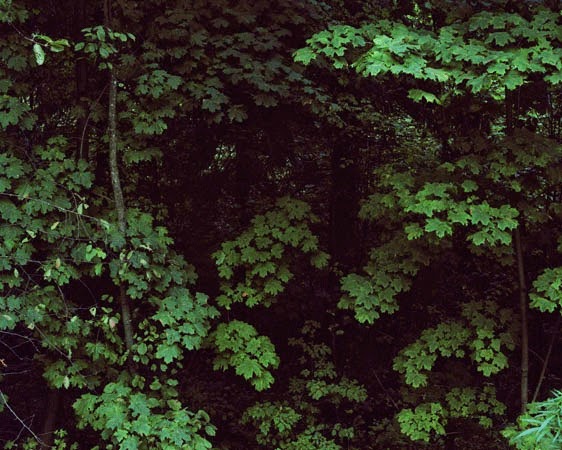
Indrė Šerpytytė is one of the artists currently showing as part of Conflict Time Photography exhibition at Tate Modern. In one of the rooms (towards the end) she is showing wooden carvings of KGB interrogation houses and their studio "portraits". Refreshingly, her take on Lithuanian history is a non-judgemental, non-sentimental commentary with plenty of gaps and empty spaces for the viewer to fill in. My favorite works, however, are those from Forest Brothers series: dense treescapes, suspended between the world of Hansel-and-Gretel-fairy-tale fear of the dark forest and an honest link with factual landscape of the post-war Lithuanian resistance fighters. Less is more.


↓  procrastinating

The final good news is called WIKIGALAXY. Computer science MA(!) student Owen Cornec put together this galaxy-style visualisation of tens of thousands of Wikipaedia pages to help you get lost down even more rabbit holes of useless but fascinating information. While drifting aimlessly among his 3D paths linking various concepts, I did wonder if this could be called a binding. If the metaphor of book can extend into the digital reading media, could we not extend the notion of binding too, to denote the ways that keep separate pages of digital information together? 


[Egidija]


Wednesday, 28 January 2015

Artists’ Books and Appropriation

An ongoing project of mine (hidden away in the background) is making new artworks from books by Virginia Woolf (particularly Mrs Dalloway), in the hope of teasing new voices from her beautiful, intricate narratives. In this blog post I wanted to look an example of an artist whose work also does this, an artist whose work also raises questions surrounding copyright.

In 2010 Simon Morris published the book Getting Inside Jack Kerouac's Head through his own imprint informationas material in 2010.  His book started life as a blog in which Morris copied a page a day of Jack Kerouac’s novel On the Road as an exercise in better understanding the book and the author’s writing process.  As blogs are displayed showing the latest entry first, those wishing to read On the Road through Morris’s blog will be faced with the book in reverse order.


The printed book retains the reversed page order and uncorrected text of the blog and the cover is designed to resemble the 2007 Penguin Modern Classics edition (compare image 1 and 2).  Although the text in the book is ostensibly Kerouac’s these minor differences distance Kerouac’s work from Morris’ in a dramatic way; if a reader were to pick up On the Road, they would find a linear story about a road trip; if a reader were to pick up Morris’ book, they would find a disjointed story, a story that prompts the reader to question the nature of the book they were holding.  The difference here is a conceptual one.


I heard Morris speak at the Whitechapel Gallery in 2011 about his own approach to using the material of others as a starting point. He said that ‘If there is no danger of being original it can be very liberating.’ Morris’ view implies that it is Kerouac’s On the Road, which carries the burden of originality and not Getting Inside Jack Kerouac's Head.  It is this weight however that makes copyright such a fiercely contested terrain. I think this sense of freedom is apparent in the work, as the book comes across as a game in a way, one that one that Morris has played with commitment and determination.

Copyright and reproduction are important topics in the book world, particularly with the threat of Google’s mass book-digitization programme, which has dramatic implications for the global publishing industry (according to Robert Darnton, in The Case for Books).  Google’s quest to scan and make available millions of books has triggered legal action from publishers and re-raised questions of intellectual property and ownership. Morris’ book can’t help but touch on that as it is almost (but not quite) a word-for-word copy of Kerouac’s.

Questions of copyright and ownership first came about in the 18th century when it was created to break monopolies in book publishing, ensuring authors were protected and other publishers were able to distribute works (Lessig, Free Culture, 2006).  Two hundred years later copyright now appears to protect the interest of corporations, ensuring that intellectual property can be controlled long after the death of the original creator.

Several publishers (and notably the author J. K. Rowling – who released the digital versions of Harry Potter) are moving away from such strong digital encryption, allowing books to be shared more easily. And perhaps these gestures, along with the works of artists such as Morris, are pushing the boundaries and encouraging others to play with content and give it a new or alternative life. 

{Chris}

Wednesday, 21 January 2015

intimate // public


Through my own practice I have become fascinated with the place in which text or language sits. This might be within the intimate confines of a book or in an open ‘public’ space such as a gallery. 

In terms of the intimate book Holland Cotter sums up nicely the intimacy shared with the object. ‘…books are created for one-on-one interactions. They are, by nature zones, of privacy. There is no way, short of censorship, for an outside observer to or control the intimate encounters they offer…’ (Cotter, 1994)

There is a certain quality in reading that absents us from the world around us. A certain skill in the author perhaps that takes you beyond the world in which we are. None more is this escape apparent than in the work of André Kertész. ‘Thriving on the paradox that even in the most crowded, public space one can enjoy such a solitary, private activity’ (Smart, 2009)

Figure 1: André Kertész, Long Island University, New York, 1963

‘Blissfully unaware they are being snapped, Kertész's subjects appear transported, fleetingly removed from life as we know it, into their realm of reading.’ (Smart, 2009) 

I find that intimate engagement with a space fascinating. All your attention given over to an object. Or rather language/text within an object. It is a direct connection with language.


Figure 2: Carey Young, Consideration 2004


In a public space however this may change. Carey young an artist who works within the realm of officialdom, legal contracts and bureaucracy become the method of communication., The control is often subtle but can be brash. The language and place are key elements to her practice. Place that is dictated by language and language that is dictated by place. Often working with legal teams, the work is about the boundaries we share everyday between rules that govern our place and that place we move around in.  ‘In this work, a legally-impossible contract is established between artist, art gallery and viewer, questioning the notion of information, independence and control in liguistic and special terms.’ (Young, 2005)

The language subverts the space in which people move around. This is the space at large taking control of movement and understanding. It is a shared connection with language. 


The language/text will always reference the place it is put in, as it relies on this space for existence. Words sit on walls and on pages. The joy language has in space is that it is in that space; on paper, on screen, in the ear, always held by the physical. As much control language can have over a space with regard to the words, the space is always there as a constant reminder of the words fragility. Language will always be about space if it conjures up a world or describes an environment, even floating though a concert hall and connected though the internet. But language is not solid and it can change states through this space. Language can so easily transform from the intimate space to the public and vice-versa. As much as it relies on this place as a carrier it can so quickly take control. Words read aloud are transformed from an intimate space to a public one. Spoken language written down goes from the public to intimate. It is not so much the control these spaces and the language has it is the fluidity of language to bridge these spaces. Space whether intimate or public will always hold language. It is only in languages power to make us realise this space where its control lies.


[George]


References:

Cotter, C (1994) Drucker, J. The Century of Artists' Books . New York: Granary Books 

Smart, A. (2009) André Kertész: On Reading, at The Photographers' Gallery. The Sunday Telegraph. 17 July. Seven Magazine

Young, C. (2005) Consideration. [internet]. Available from < http://www.careyyoung.com/past/consideration.html> 


Young, C. (2009) Speech acts. [internet]. Available from < http://www.careyyoung.com/past/speechacts.html> 


Illustrations:

Figure 1: André Kertész, Long Island University, New York, 1963 [online image] Available at: <http://www.guardian.co.uk/artanddesign/gallery/2009/jul/23/andre-kertesz-on-reading-exhibition?picture=350678872> 

Figure 2: Carey Young, Consideration 2004 Available at: <http://www.careyyoung.com/past/consideration.html>